Figures – start

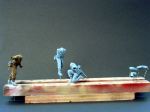
During the last weeks, I built the figures and started painting them. I kept the arms, heads and hands apart for ease of painting. The parts of the gear were then cut into shape using the Dremel tool and a hobby knife to make them fit to the underlying parts of the figures (e.g. the bread bags). I then also added parts of the carrying straps from Milliput.

Then the figures and all parts left were primed using Tamiya grey, and then I started painting them. One figure is now finished except for the boots (I will paint these after the heads and the hands are finished and glued to the figures).

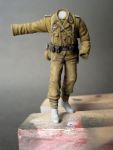
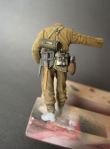
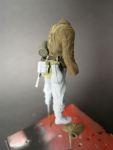
The painted figure:

Almost everything is painted using Vallejo acrylics, only for deeper recesses (gas masket can, canteen, mess kit) a slight oil wash was used. Seams were also highlighted and shadowed using acrylics.

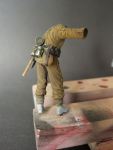
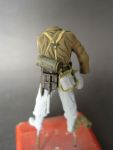
I also started with the second figure:
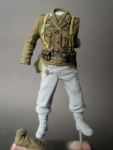
The uniform jacket is already shadowed and highlighted, outlining is still missing. The belt and the ammunition pouches are also finished, the bread bag received its base color.
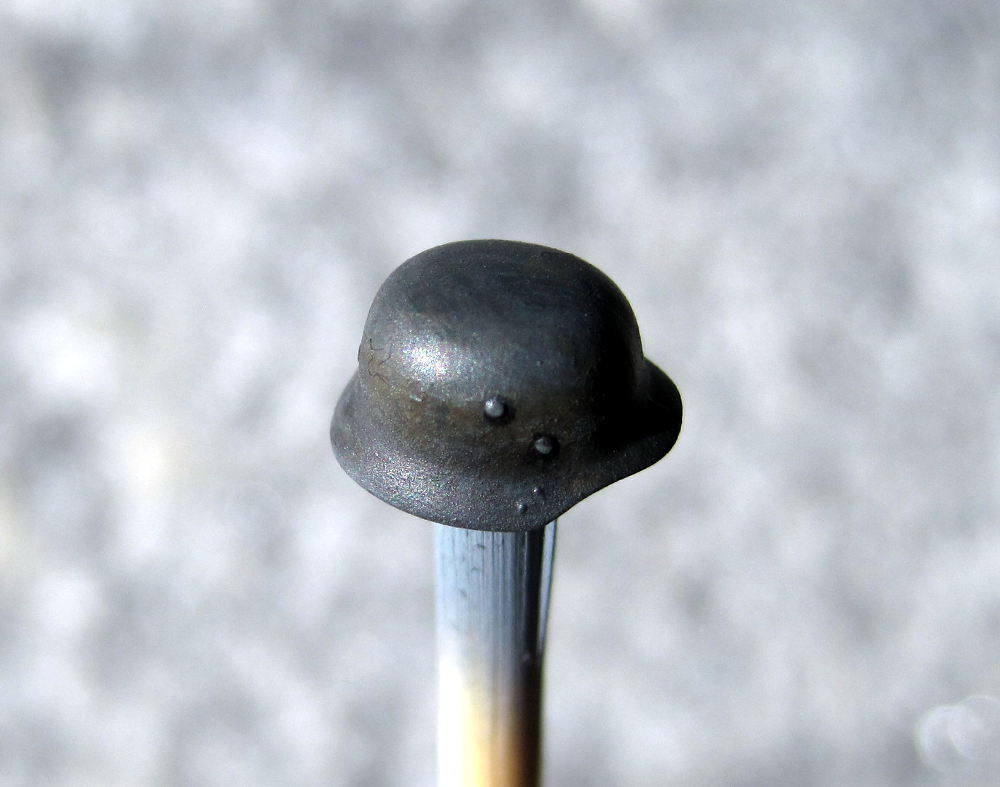
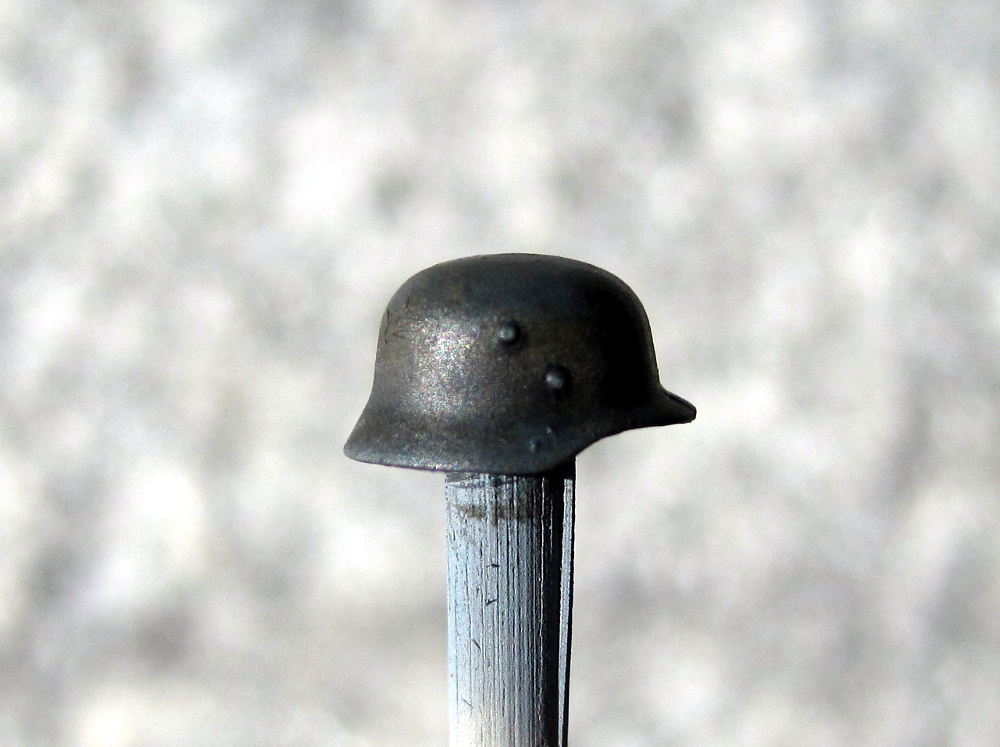
German helmets – slate grey

Until now, I have painted the helmets of the Dragon figures. A lot of material dealing with German helmets can be found on the web, these helmets will be painted in slate grey.

I started with priming with Tamiya medium grey and then hand painted the helmets using Vallejo Black Grey with some Russian Uniform added to lighten the color.

Inspired by an example from Calvin Tan (http://zyclyon.blogspot.ch/2011/09/alla-prima-wet-on-wet-with-acrylic.htm), but he is using acrylic color with drying retarder) I added tiny spots of different oils (yellow ochre, burnt umber, black, warm grey) and blended them carefully with a brush dampened with turpentine. You have to work very concentrated and stop blending in time, otherwise the helmet is covered with a single color mix. First, I tried also using blue, but this can result in some ugly greenish tint together with the yellow and orange tones.

When dried, a point wash around the rivets was added. Then, some highlights on the top of the helmets were added using the Vallejo base color lightened with Deck Tan.

Helm 03    Helm 02

The base is waiting for the figures…

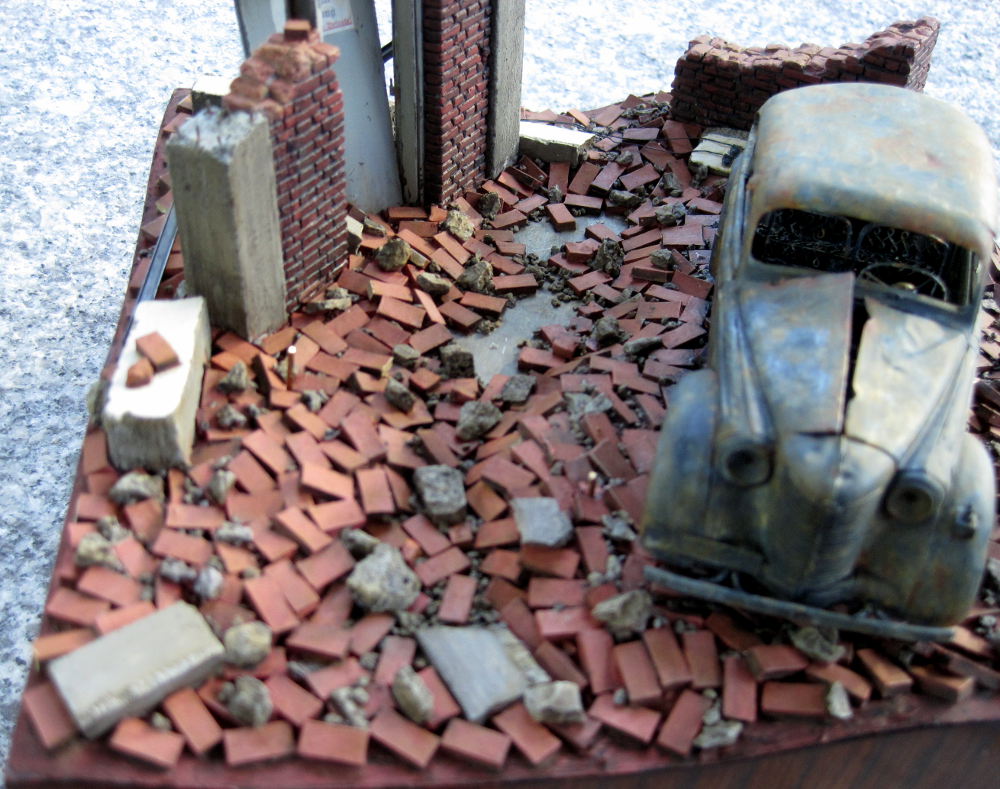
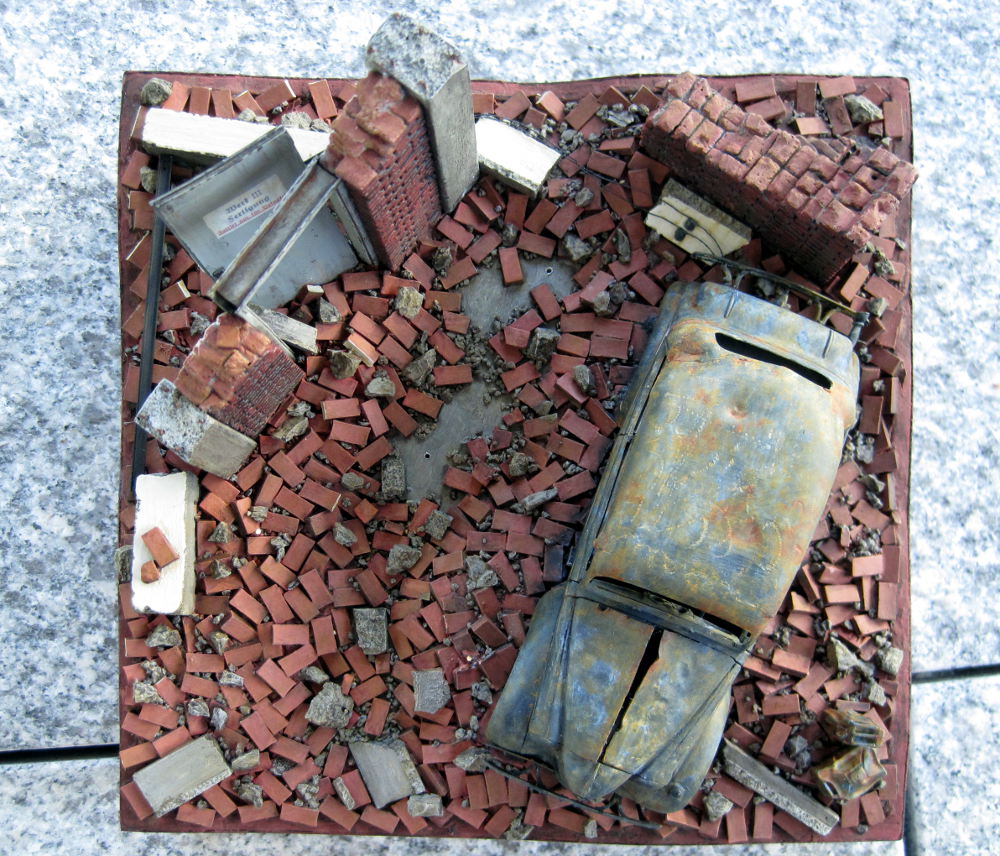
Now I finished the bricks and the rubble in the space where the figures are to be placed. And this how it looks like (the holes / brass rods show where the figures will be fixed to):

Sockel 01     Sockel 02

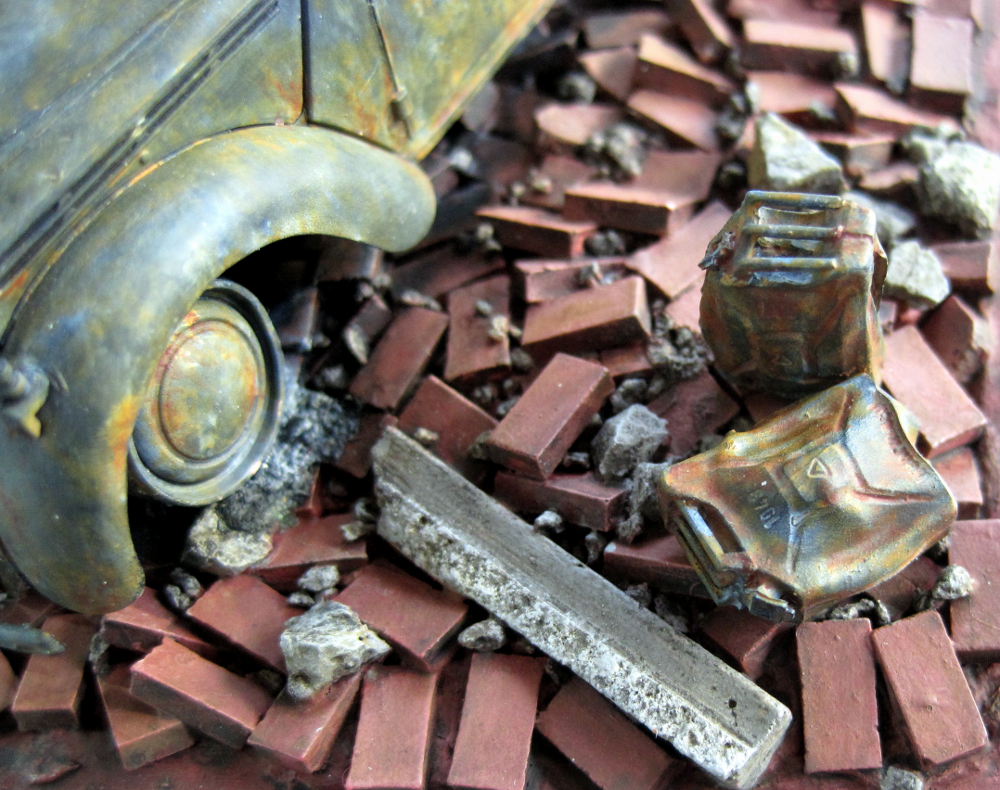
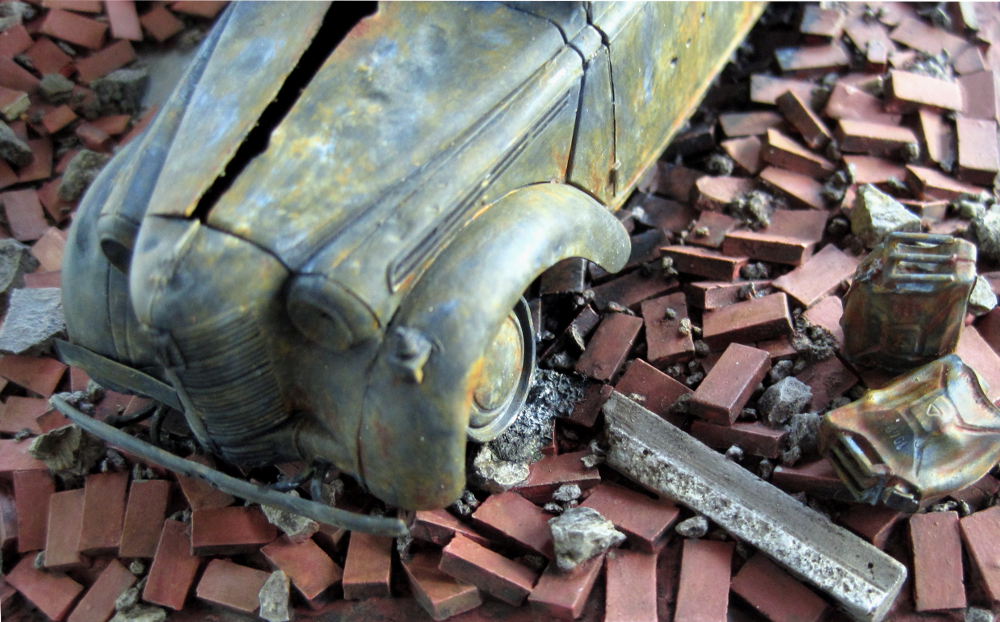
To the right of the Opel I added two burnt out jerry cans:

Kanister 01    Kanister 02

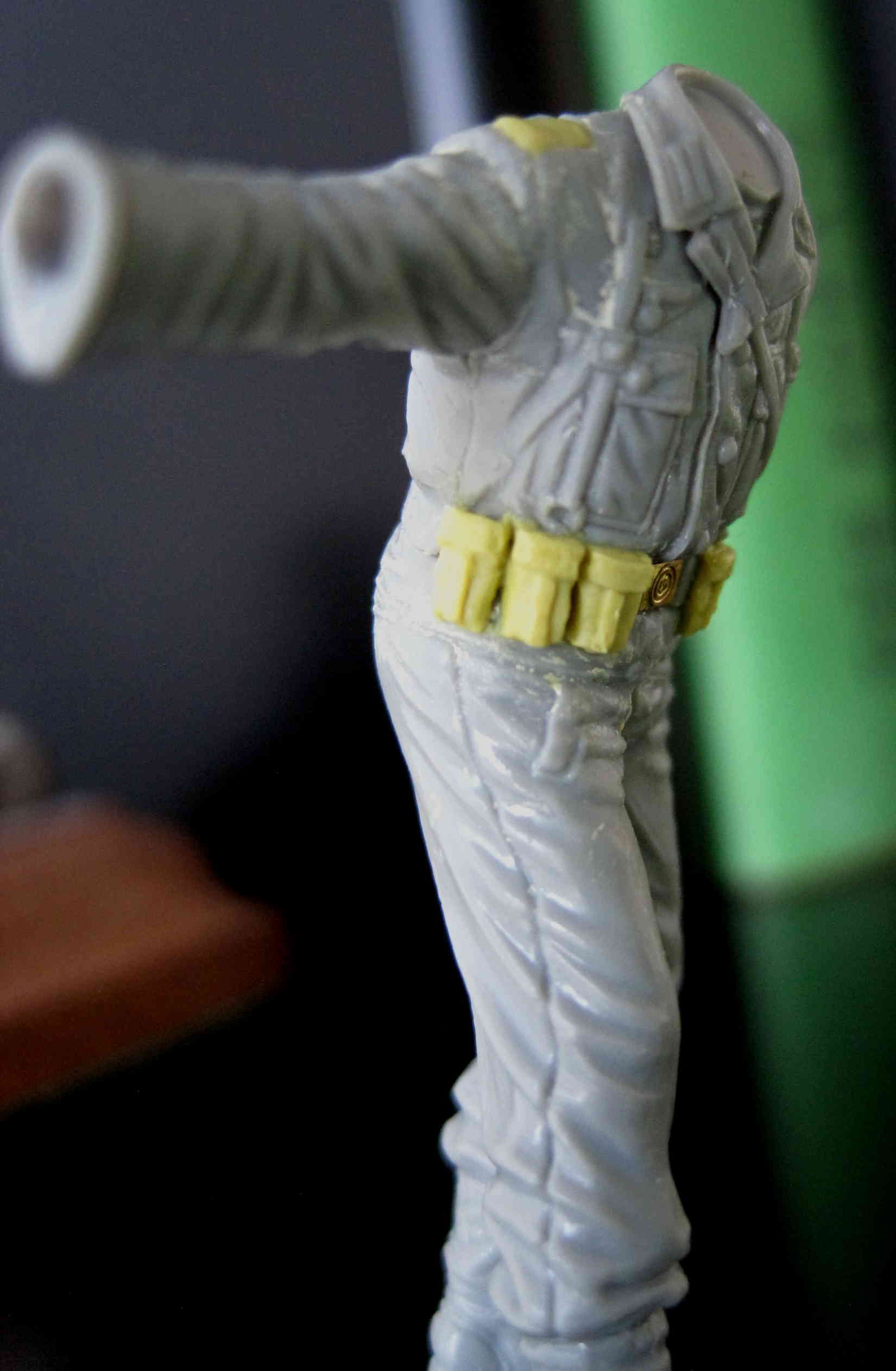
During spring this year, I already started building the figures, and added ammunition pockets made from Milliput:

Patronentaschen 01

Now I will continue to build and paint the figures.


Opel fixed to the base

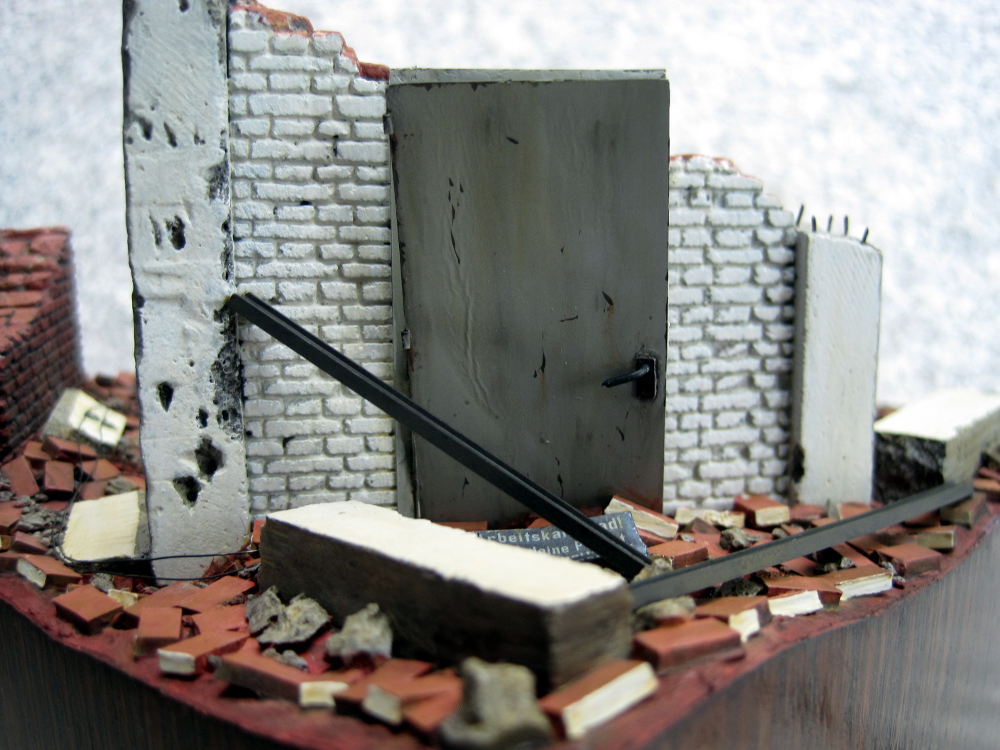
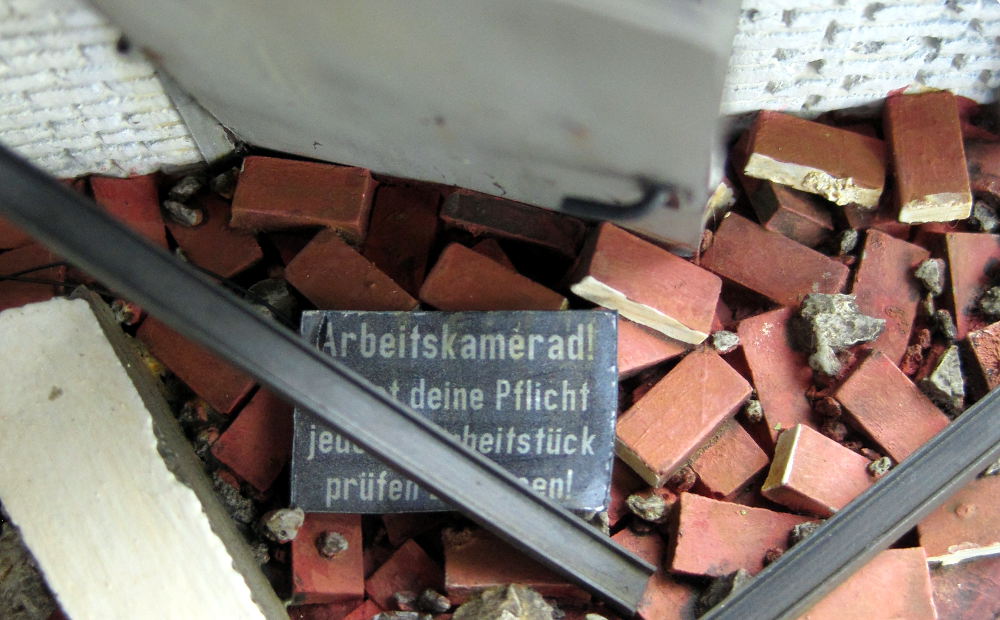
I added some more details to the base, and finally fixed the Opel to its place. Behind the door I added some steel beams and a sign (from a German wartime factory):

Hinter Tür    Schild hinter Tür

The bricks around the Opel were then blackened with enamel paint and oils:

Unter Kadett schwarz

And this is how the base looks like now:

Now I have to finish the rubble, and then move on to the figures…

Rubble

Last week I have been busy creating the rubble on the diorama base. The ground was filled first with some insulation foam, to reduce the thickness of the celluclay layer. On top of the foam, celluclay mixed with white glue, red color and water was applied using an old brush.

Into the still wet celluclay I pressed single scale bricks (from Juweela) and small plaster parts, adding some white glue first. After this had dried, I added some small stones and model railroad ballast.

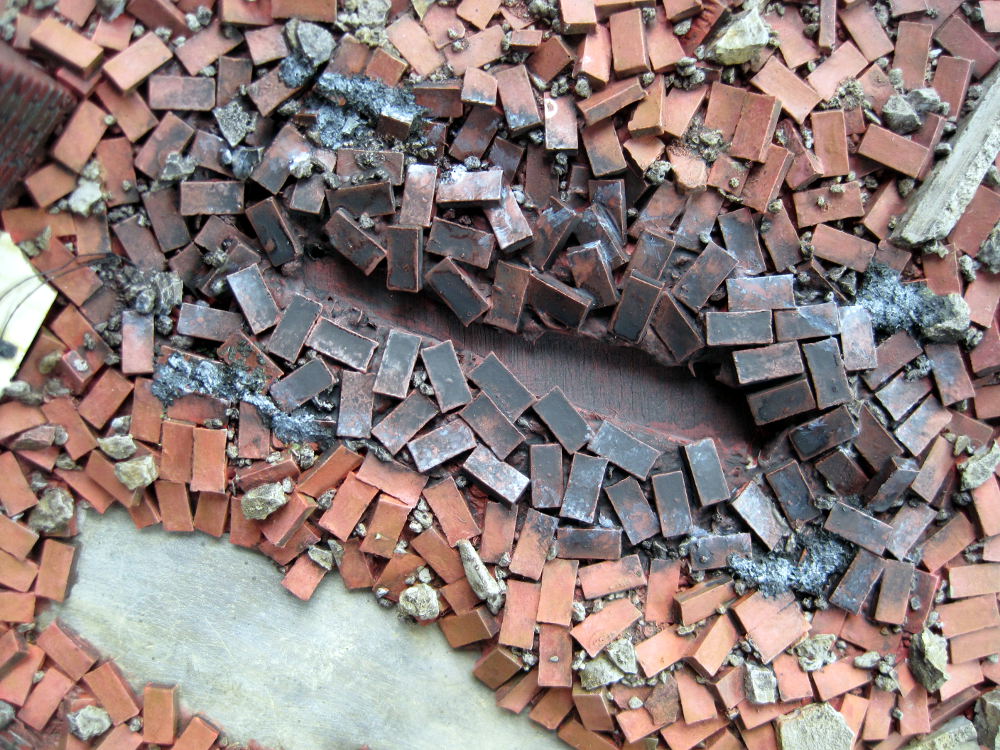
As all was dry, I painted the rubble. I started with a base layer of brick red and light gray for the concrete parts. Then I applied a wash from oils (lamp black and burnt umber), blending and removing stains with a clean brush moistened with white spirit. After this had dried, I slightly dry brushed the bricks using a orange red color, and a light grey color for the concrete parts.

As a final touch I added a filter from ochre and some umber. This added a lot of realism to the colors, as the stark contrasts are subdued, the red and gray hues become much more natural and the overall color range is compressed, also making the overall impression more natural:

Over the “slit” visible on the right hand side the burnt out Opel will be placed.

Now I will add some more details (steel parts, another plate, cables) and also more rubble to the ground areas not yet covered, but this has to wait for the figures being ready to be fitted to the base. Of course the Opel also has to be added, after blackening the bricks under the car.

The ruins are finished

The wall pieces are now fixed to the base. The door casing between the brick walls is made from styrene sheet and some brass parts from the stash. Things start to look very solid now:

Ruine roh 01  Ruine roh 02

After priming with Tamiya gray I painted everything with Vallejo acrylics. A wash and further details were added using oils.

The door will be placed forced out of the hinges inside the door casing. The plate reads “Keep out” and was made from decal sheet:

Tür 01  Türe 02

These are the painted ruins:

The next step will be covering the ground with rubble, using some scale bricks and plaster parts. The ground will be made from a local version of celluclay.

I am a bit nervous, as I never tried making groundwork this way. And perhaps the diorama will be finished until Christmas time…

Diorama base and ruins

Now the base is finished. It is made from a plywood board, some ledgers and thin plywood parts attached to the sides. After being glued together, it was covered with veneer, stained and varnished.

This is how the base looks like at the moment:

Auf Sockel 02 Auf Sockel 01

Here the stained and varnished veneer is visible.

Sockel

The walls are made from plaster parts being left over from the first version of the scene, and are temporarily placed on the base. Behind the Opel, there will be a small brick wall, opposite to the car a wall with concrete pillars, bricks and a steel door.
The brick structure was carved into the plaster using various sculpting tools:

Mauer roh 02 Mauer roh 01

burnt out Opel painted

After my summer holidays, I continued working on the Opel. I attached the registration plate holders and reworked the roof. Then everything was primed with Tamiya flat black.

Then I used different oil paints (Paynes’ grey and white) on the model, applying small dots of color and then blending them with a clean brush moistened with turpentine. The blending brush must be almost dry, so it is important to remove as much turpentine as possible on a paper towel before blending the colors.

After this has dried, rust was applied using thinned ochre yellow and burnt siena, and also blended.

As reference, I collected some pictures of burnt out cars in different states of decay. Light rust of a bright orange color seems to appear immediately after the burning, and this look I wanted to create. As time goes by, the car wreck continues to rust, with the rust becoming darker.
Now I have to attach the roof and rework the paint job, where the roof is glued to the car. Maybe I will also use some pigments.
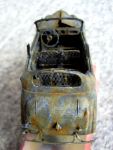
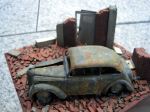
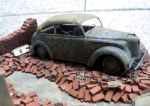
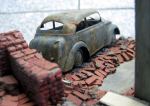
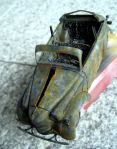
And that is how the Opel looks like:

converting the burnt out Opel

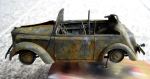
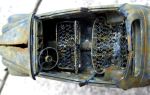
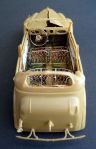
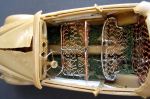
For some time I have been busy with converting the Opel, which is now almost ready to get painted. Only the roof, which will be fitted after painting the car, and the registration plates are missing. For the roof, I will use the kit part, thinned using my Dremel tool, and also be scratched and bent. The registration plate holders will be made from brass sheet.

The remaining parts of the seats are made from copper wire, and some parts (pedals, gear switch, steering wheel) are made from brass. Apart from that, the kit parts where used. Some parts were thinned with the Dremel and some dents were created with my sculpting tools after the plastic was made soft using a soldering iron cautiously held above the surface.